When large language models began reading websites to answer questions, a new question landed on every developer's desk: is my site actually readable to a machine? Most advice points to one file, llms.txt, a Markdown document you place at your domain root to hand models a curated map of your best content. The llms.txt specification, proposed by Answer.AI's Jeremy Howard in September 2024, is a genuinely useful idea. Treating it as the whole job is a mistake.
AI-readability is not a file you drop in and forget. It is architecture. The crawlers behind ChatGPT, Perplexity, Gemini, and Google's AI features fetch, parse, and map your site the way search crawlers always have, except the output is now a synthesized answer, not ten blue links. So the durable work is structural. It is also worth being honest about adoption: as Search Engine Land reported, Google's Search team has said it does not use llms.txt and has no plans to. This post covers the architecture that earns AI visibility and puts llms.txt where it belongs: a complement, not a substitute.
Key Takeaways
- llms.txt is an optional map, not a ranking mechanism, and Google's Search team has said it does not use it.
- Real AI-readability is architectural: serve core content in the initial HTML response so any crawler reads it without executing JavaScript.
- Logical URLs, consistent canonicals, and complete XML sitemaps plus RSS or JSON feeds tell crawlers what exists and which version is authoritative.
- Sensible internal linking lets a crawler map your whole site, and fast rendering ensures it reaches every page.
- Structured data built on schema.org turns prose into discrete facts a model can lift straight into an answer.
Where llms.txt Fits, and Where It Stops
An llms.txt file is Markdown with one required element, an H1 carrying the site name, plus an optional summary and H2 sections that list key pages. The problem it solves is real: context windows are small, and a curated pointer to your distilled content spares a model from parsing a full page of navigation, ads, and scripts.
The limits are just as real. llms.txt is a self-declared signal, the category search engines learned to distrust years ago with the keywords meta tag. It is proposed, not standardized, and no major AI system has confirmed it uses the file to rank or retrieve content. Build one if it is cheap to maintain, but expect it to help tooling more than crawlers today. Our practical guide to building an llms.txt file covers the format; the rest of your budget belongs in the architecture below.
Put Your Content in the Initial HTML Response
The highest-leverage move is making your content visible in the raw HTML a server returns, before any JavaScript runs. Google documents that Googlebot processes pages in three phases: crawling, rendering, and indexing. Rendering, where a headless browser executes your JavaScript, is queued separately and is expensive. Google's guidance is blunt: "server-side or pre-rendering is still a great idea because it makes your website faster for users and crawlers, and not all bots can run JavaScript."
Many LLM crawlers fetch HTML without running a full browser engine, so anything painted in by client-side JavaScript alone may be invisible to them. Three fixes:
- Render on the server or pre-render, so the main content, headings, and links exist in the first response.
- Use semantic HTML: real headings, paragraphs, lists, and landmarks like main, article, and nav so a parser can tell structure from decoration.
- Keep facts in text, not locked behind clicks, tabs, or images. If a price, hour, or claim matters, make it readable.
Logical URLs and Consistent Canonical Signals
A crawler builds a model of your site from its URLs. Shallow, descriptive, lowercase paths that mirror your hierarchy, such as /services/website-development rather than /p?id=8842, signal what a page is about before it reads a word. Keep one URL per piece of content and avoid tracking parameters and near-duplicate variants that fragment your signals.
Where duplicates are unavoidable, canonicalization resolves the ambiguity. Google defines a canonical URL as the version it considers most representative of a set of duplicates, and it consolidates ranking signals onto that version. Make every signal agree: the rel="canonical" tag, internal links, sitemap, and any redirects should point to the same address. Contradictory signals force a crawler to guess, and it may cite the wrong page.
Sitemaps and Feeds: A Machine-Readable Table of Contents
If clean HTML makes each page readable, sitemaps make the whole site discoverable. Google describes a sitemap as "a file where you provide information about the pages, videos, and other files on your site, and the relationships between them." It helps a crawler find URLs it might otherwise miss, especially on large catalogs, new sites, and pages with few inbound links.
Ship a complete, current XML sitemap, keep it free of redirects and noindexed URLs, and reference it in robots.txt. Then add feeds: an RSS or Atom feed, or a modern JSON Feed, gives crawlers a lightweight, structured stream of your latest content, already parsed. Together, sitemaps and feeds are the table of contents a model consults to learn what your site contains and what changed.
Internal Linking and Fast Rendering So Crawlers Reach Everything
A sitemap lists your pages, but internal links show their relationships and importance. A crawler that lands on one strong page should reach every other important page through descriptive, in-content links. Orphaned pages with no inbound links are effectively invisible, while a flat, well-linked structure spreads authority to the pages that own each topic. Our internal linking strategy for faster indexing lays out the hub-and-spoke pattern that does this cleanly.
Speed is the enabler underneath it. Crawlers work within time and resource budgets, so a slow server means fewer pages fetched per visit and rendering that may time out before content appears. Fast time to first byte, efficient HTML, caching, and a CDN let a crawler reach more of your site per visit. Building this in from the start is the kind of foundation our website development company built for AI crawlers ships with every project, rather than bolting it on afterward.
Mark Up the Facts With Structured Data
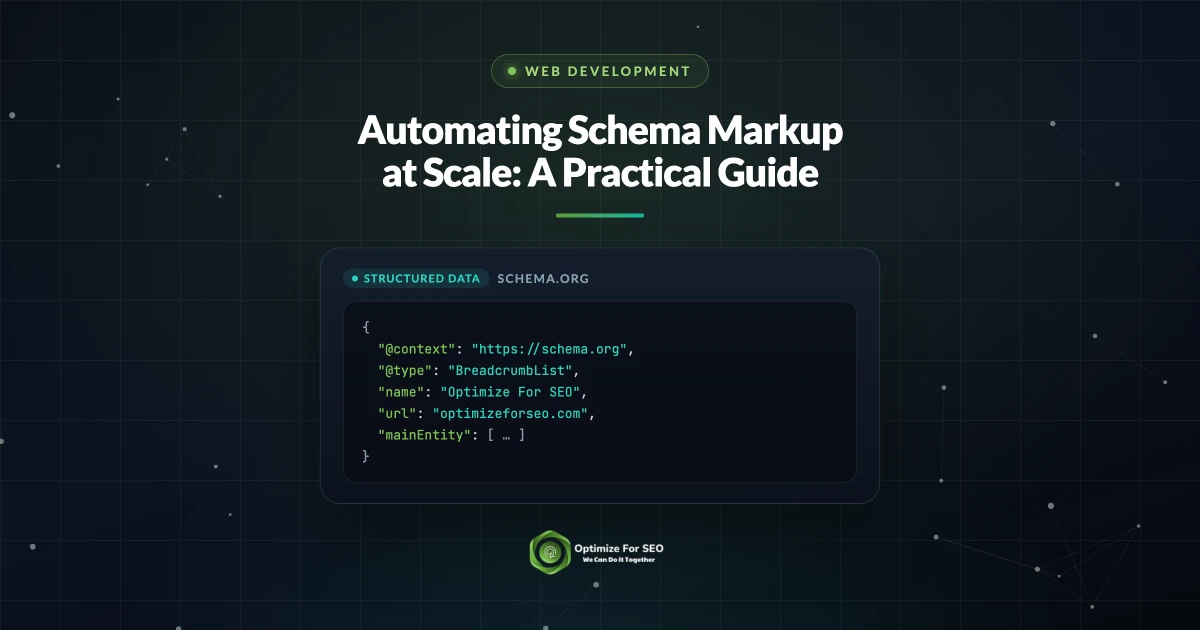
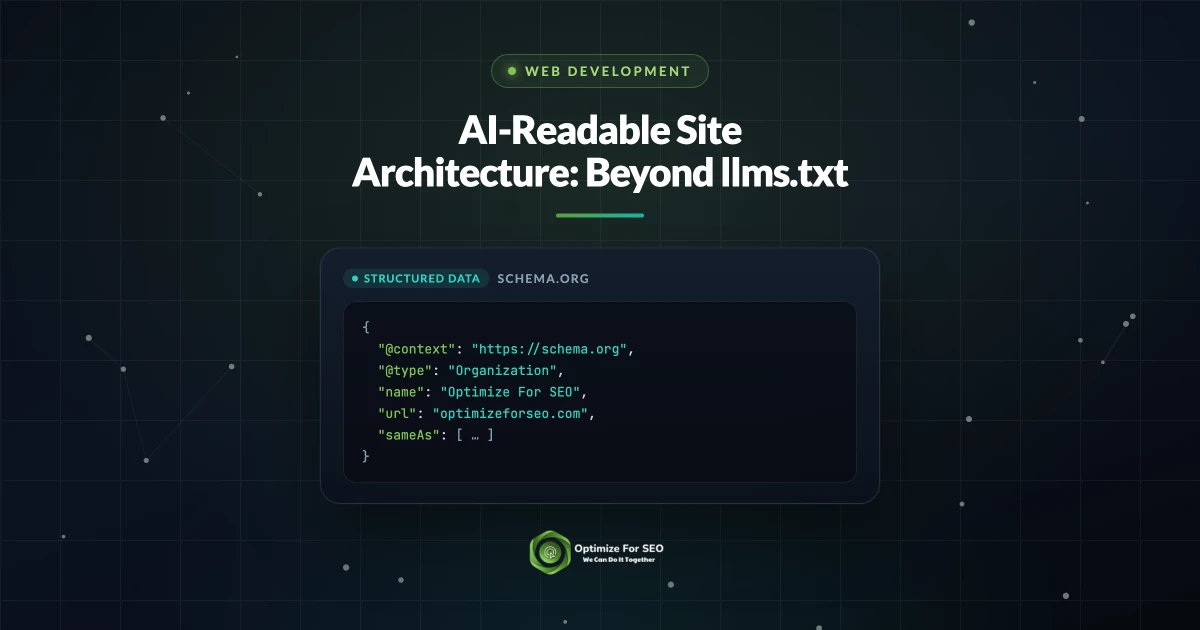
Everything above makes your content readable; structured data makes it unambiguous. Vocabulary from schema.org, expressed as JSON-LD, labels your facts explicitly: this is a price, this an organization, this a review rating, this an author. A model then reads a clean object it can trust instead of inferring meaning from prose. Organization, LocalBusiness, Product, Article, and FAQ markup are the high-value types for most businesses. Keep the markup consistent with the visible content and your other signals, as our rundown of the schema markup every website needs explains.
llms.txt is a small, optional tile in a larger mosaic. The site AI systems read reliably serves content in the initial HTML, uses logical URLs and consistent canonicals, publishes sitemaps and feeds, links internally so nothing is orphaned, renders fast, and marks up its facts. None of that is exotic; it is disciplined web development that pays off twice, in classic search and in AI answers. If you want an audit of how machine-readable your site is today, talk to our team and we will map it end to end.
Read More
- How to Build an llms.txt File: A Practical Guide
- The Schema Markup Every Business Website Needs
- Internal Linking Strategy for Faster Indexing
- The Technical SEO Audit Checklist for Growing Sites
Frequently Asked Questions
Is llms.txt enough to make my site AI-readable?
No. llms.txt is an optional, curated map of your content, and no major AI system has confirmed it uses the file for ranking or retrieval. Google's Search team has said it does not use it. Real AI-readability comes from architecture: content in the initial HTML, clean URLs, sitemaps, internal links, fast rendering, and structured data.
Do AI crawlers run JavaScript like a browser?
Often they do not. Many LLM crawlers fetch raw HTML without executing a full browser engine, so content injected only by client-side JavaScript can be invisible to them. Google itself recommends server-side or pre-rendering because not all bots can run JavaScript, so serving core content in the initial HTML response is safest.
Are XML sitemaps still worth maintaining for AI search?
Yes. A sitemap lists your pages and their relationships and helps crawlers discover URLs they might otherwise miss. It is especially valuable for large sites, new sites, and pages with few inbound links. Pair a clean XML sitemap with an RSS or JSON feed so systems can also detect fresh content quickly.
What is a canonical URL and why does it matter for AI?
A canonical URL is the version of a page a search engine treats as most representative when duplicates exist, and it consolidates signals onto that version. Consistent canonicals stop a crawler from guessing which page is authoritative, reducing the chance it cites a stale or duplicate URL. Make your rel="canonical" tag, internal links, and sitemap agree.
Does structured data help my content appear in AI answers?
It helps by making your facts explicit. Schema.org markup in JSON-LD labels prices, organizations, ratings, and authorship so a model reads clear objects instead of inferring meaning from text. Use it to describe what is genuinely on the page, and keep it consistent with your visible content and other signals.
Want this handled for you? Our website development company can help you build a fast, SEO-ready site that converts.
Aashirvad Kumar
Writes about SEO, digital marketing and growth at Optimize For SEO.